A new Guitar Design – Part 3

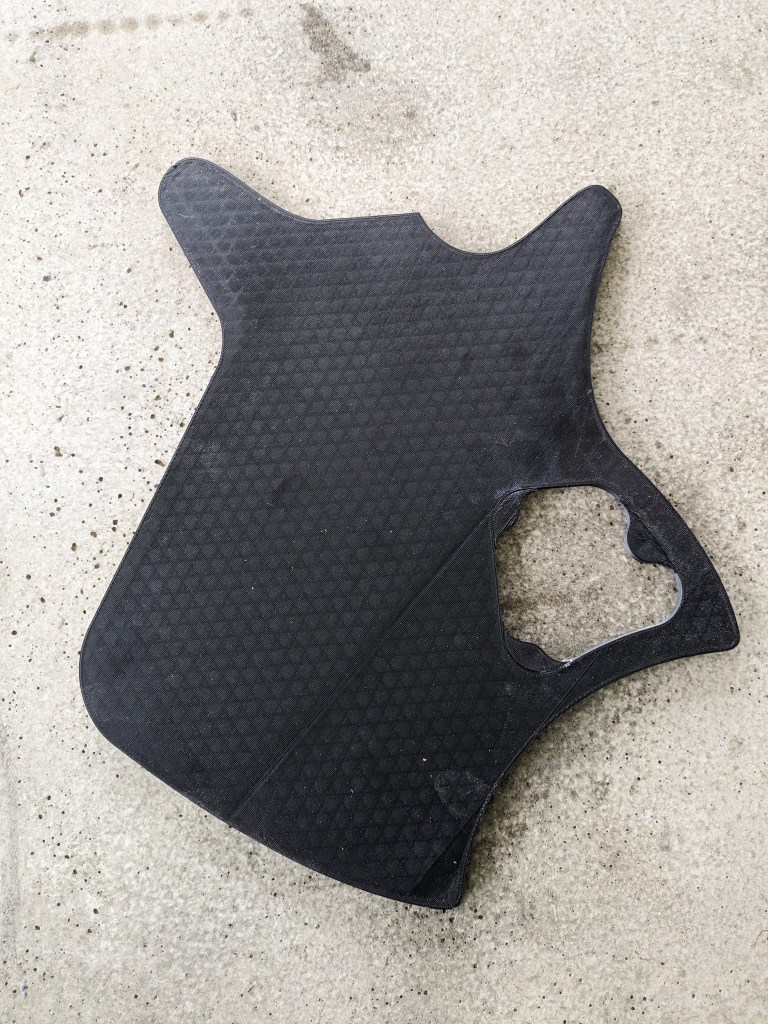
Once I had my design modeled in Fusion 360, I modeled the routing jigs I would need, and started 3D printing them. This included the body templet with the control cavity cutout and the control cavity cover routing templet. These are printed 1/4″ thick, then I use double sided “carpet” tape to adhere them to 1/2″ MDF and route to make a template that is 3/4″ thick. I do this because the 3D printed template is susceptible to heat. Routing the mdf doesn’t produce a lot of heat, but trying to rout 3/4″ or 1.5″ poplar does, and can actually start to deform the 3D printed plastic.
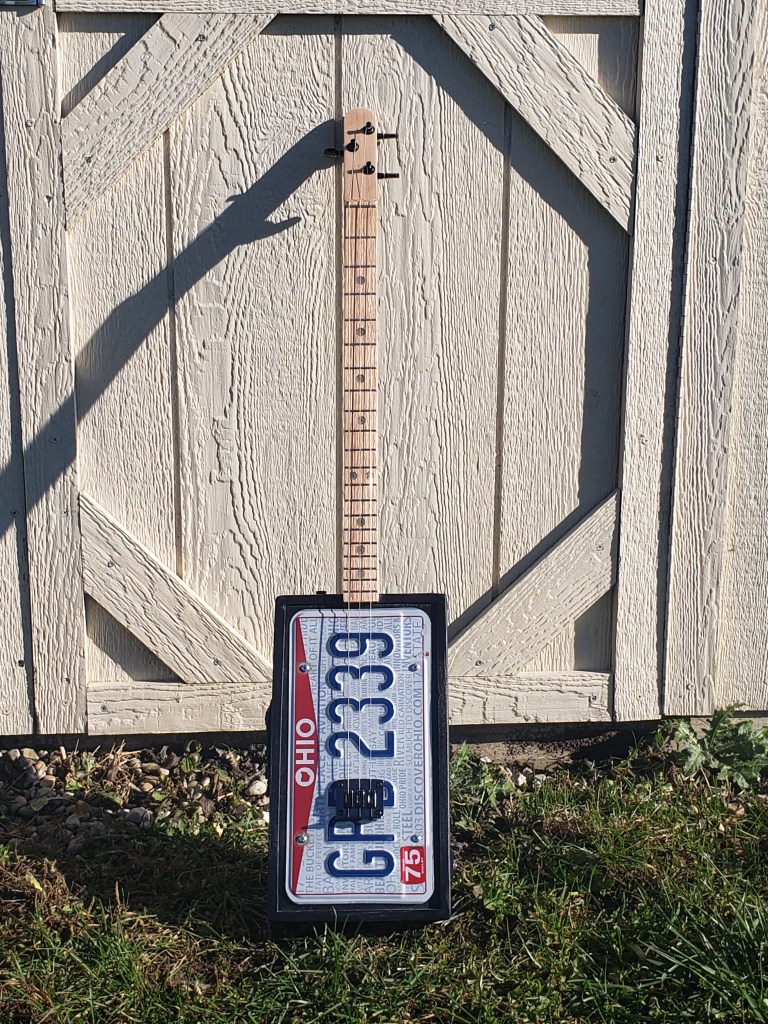
While the templates were printing, I glued up the blanks for the body, which you can see in the second picture. I took a 1″x8″x6′ poplar board and cut it into four 18″ long pieces, then edge glue two pieces together for the top and two pieces together for the bottom. then I planed them . Unfortunately, I didn’t take any pictures of this process.

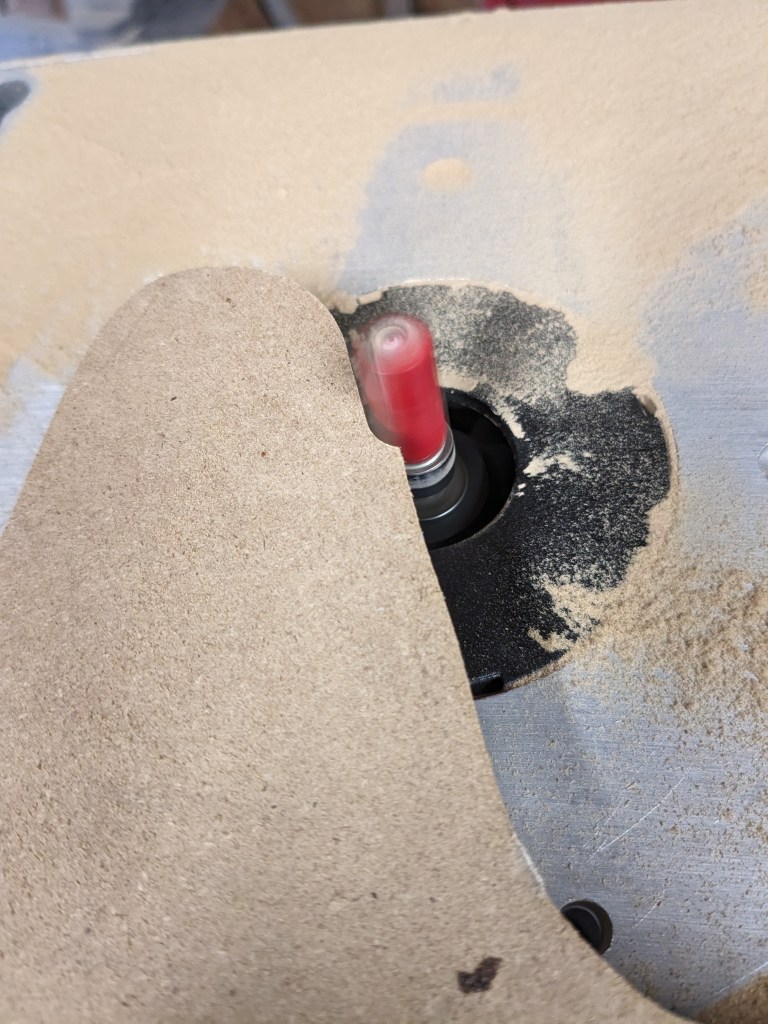
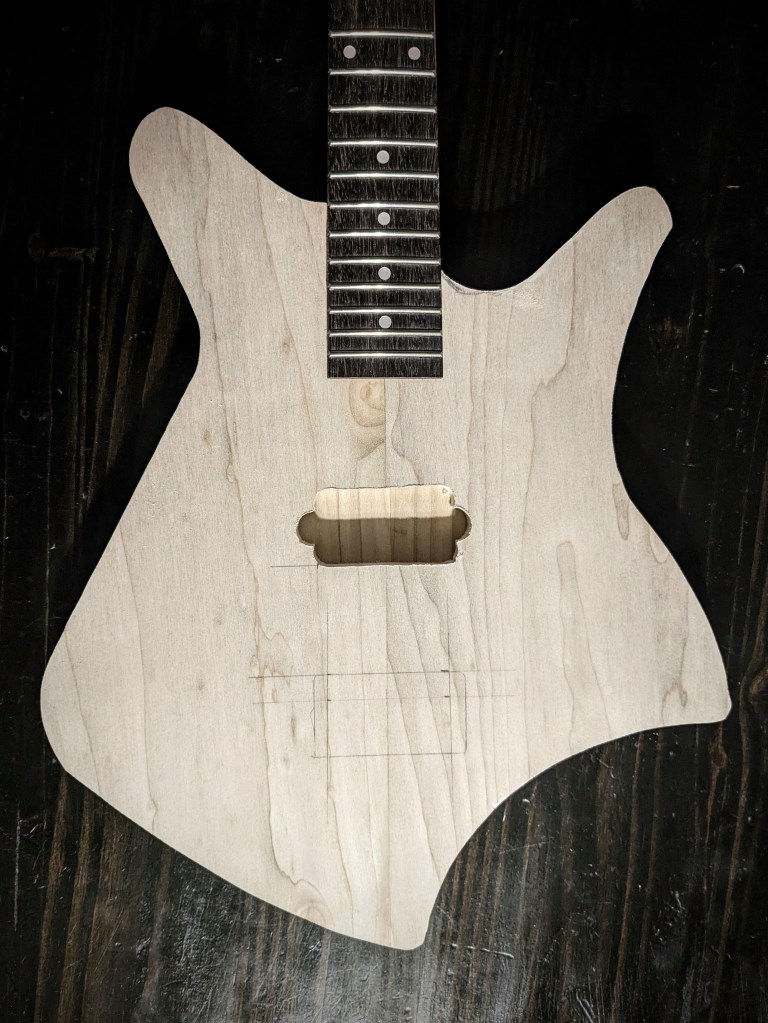
Once the blanks were ready, I traced out the template onto them and used a band saw to cut them almost to size. Then, routed exactly to size. At that point, I couldn’t resist a little mock up with the neck. This allowed me to layout the neck pocket, pickup cavity and bridge placements.

After mocking up the guitar, I realized that the cutout didn’t quite allow enough access to the lower part of the fretboard, so I freehanded a deeper cutout.
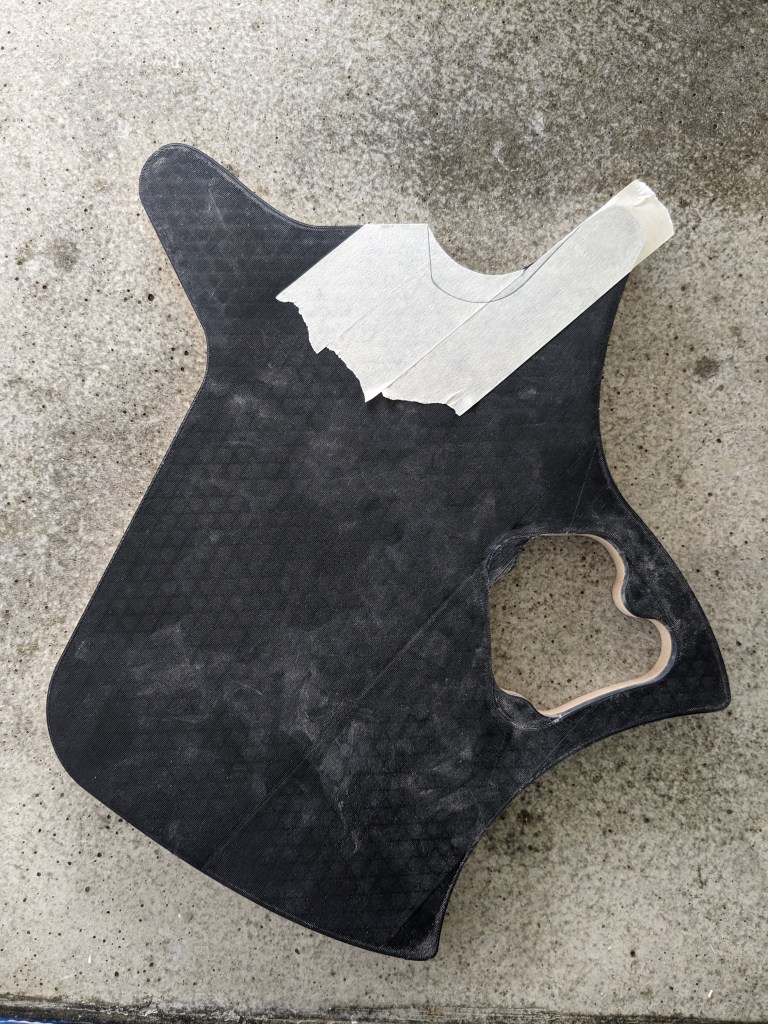
With the majority of the cutting and routing done, I glued up the top and bottom halves, using almost every clamp I own:

This is a part I definitely didn’t want to rush, so at this point all I could do was wait.

Feeling Better

So, after about a month of dealing with this bug I’m finally starting to feel like myself again which means that I want to jump right in and start working on everything I haven’t been able to touch for the past several weeks. The weather isn’t cooperating completely, which does limit a little of what I can do, but I’ve already gone for a couple (extremely disappointing) runs, gotten some writing done and made some progress on a couple guitar builds that have been collecting dust for way too long. I’ve also queried a couple more agents for My Life As Death and will try to submit to at least one more today. All in all, it’s been a pretty productive couple of days, and I still have a few more before I have to return to work.

And now that I’m feeling better, I hope to update this blog a little more often. And hopefully I’ll have something to report in regards to an agent before too long. In the meantime, feel free to check out my completed guitars for sale: https://www.etsy.com/shop/RileyCustomGuitars

3 String Guitar Build Part 1: The Neck

In messaging with a customer, I realized that I have not posted a full 3-string build, so now is the time. I’m starting with the RG-10, solid body design and then I’ll walk through the RG-9 acoustic/electric body style, but they both start with the same neck/head:

To build the neck, with a 15 degree scarf joint, I use a compound miter saw and a simple angled jig:

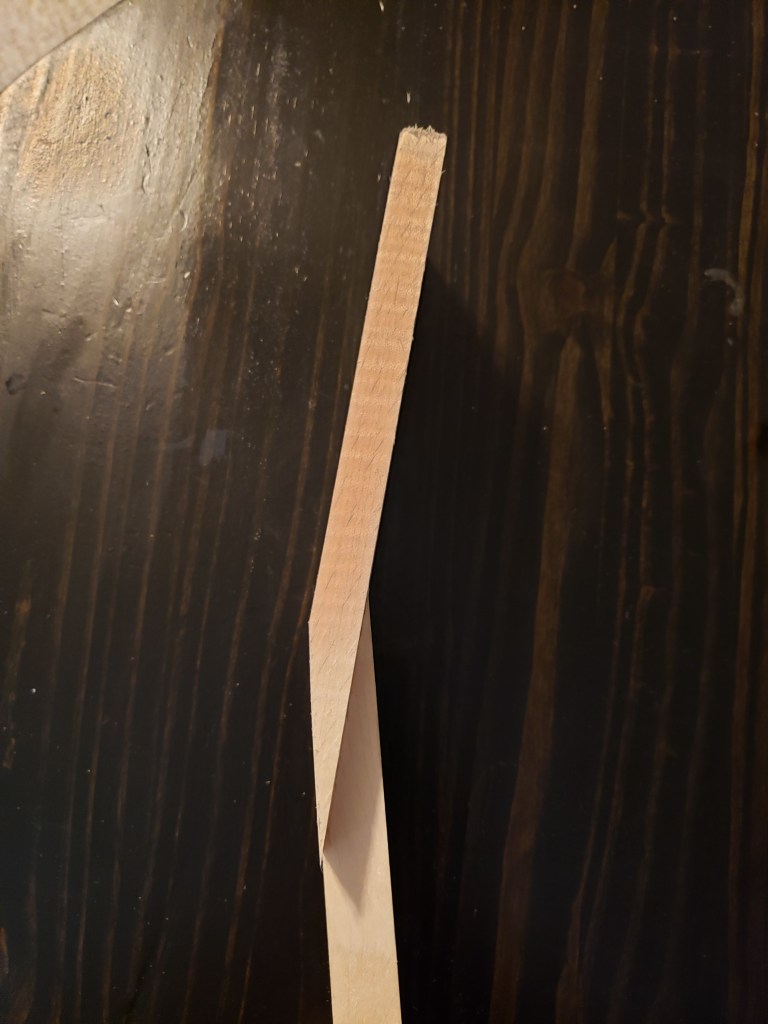
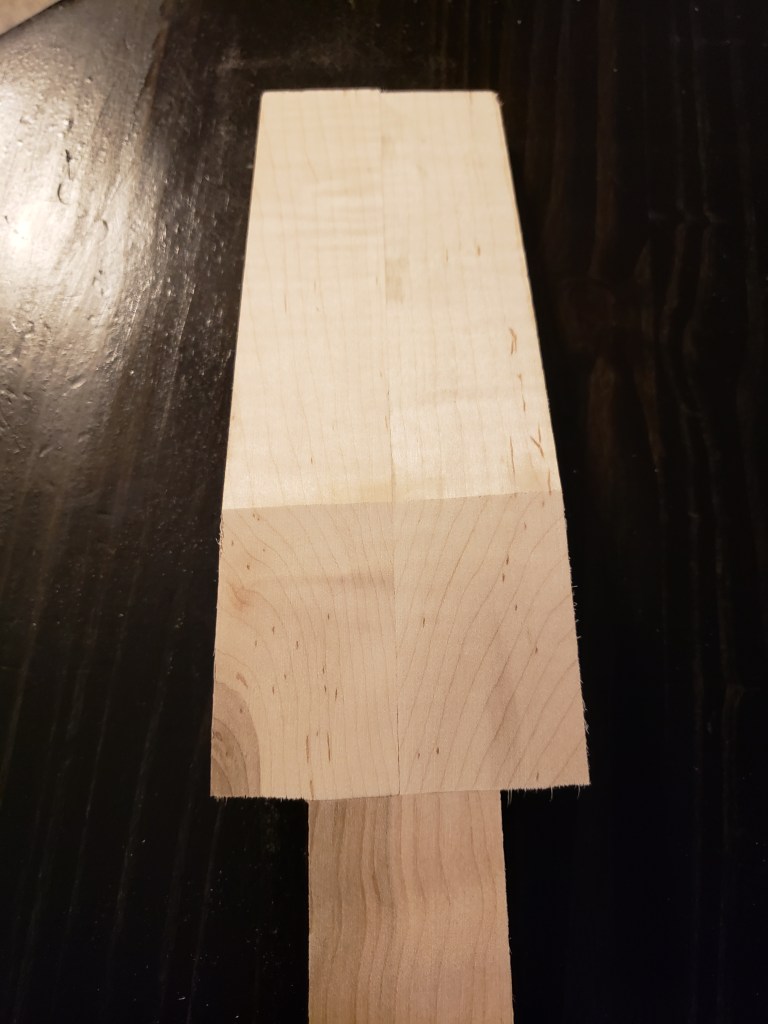
Using this jig, I cut two two smaller (~8″) pieces 1″x2″ maple that have been thinned down to 0.60″ thick. These will be glued together to make the head. I also use this jig to cut a 15 degree angle on the end of the neck. I tend to work on multiple guitars at once, hence the 4 pieces:

This process can be sped up a little, but starting with a single piece of 1″x4″ but I tend to have more 1″x2″ laying around.

Once the head pieces are glued up, I then sand and place them until they are perfectly smooth. Then I glue them to the neck

The neck and head joint usually requires just a little more sanding/planing before the piece is ready fot the head shape to be cut.

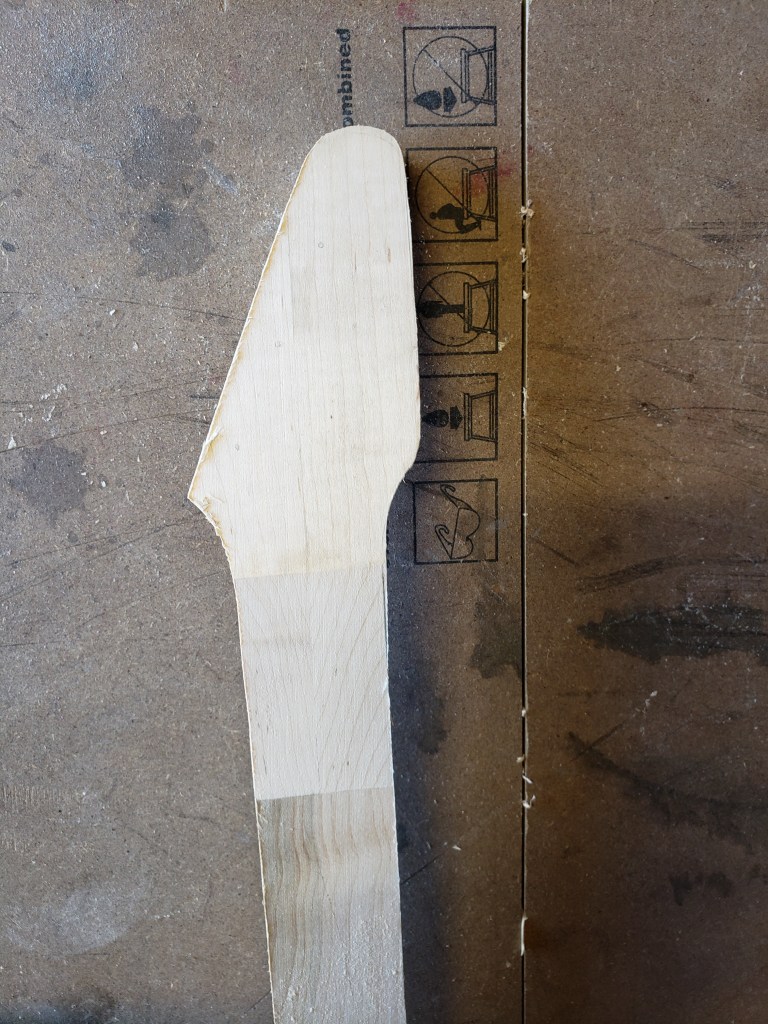
I usually draw the head shape on, using my template, then start with the band saw to get the rough shape:

An oscillating drum sander helps dial in the final shape, before I drill the tuner holes:

Once the holes are drilled, I start to shape the neck. A 45 degree router bit gets me a good shape to start with:

From there, I use rasps, files, a belt sanded and a mouse sander to get the shape I want:

I don’t spend too much time on getting it perfect just yet, because there will still be a lot more work to do once we add the body.
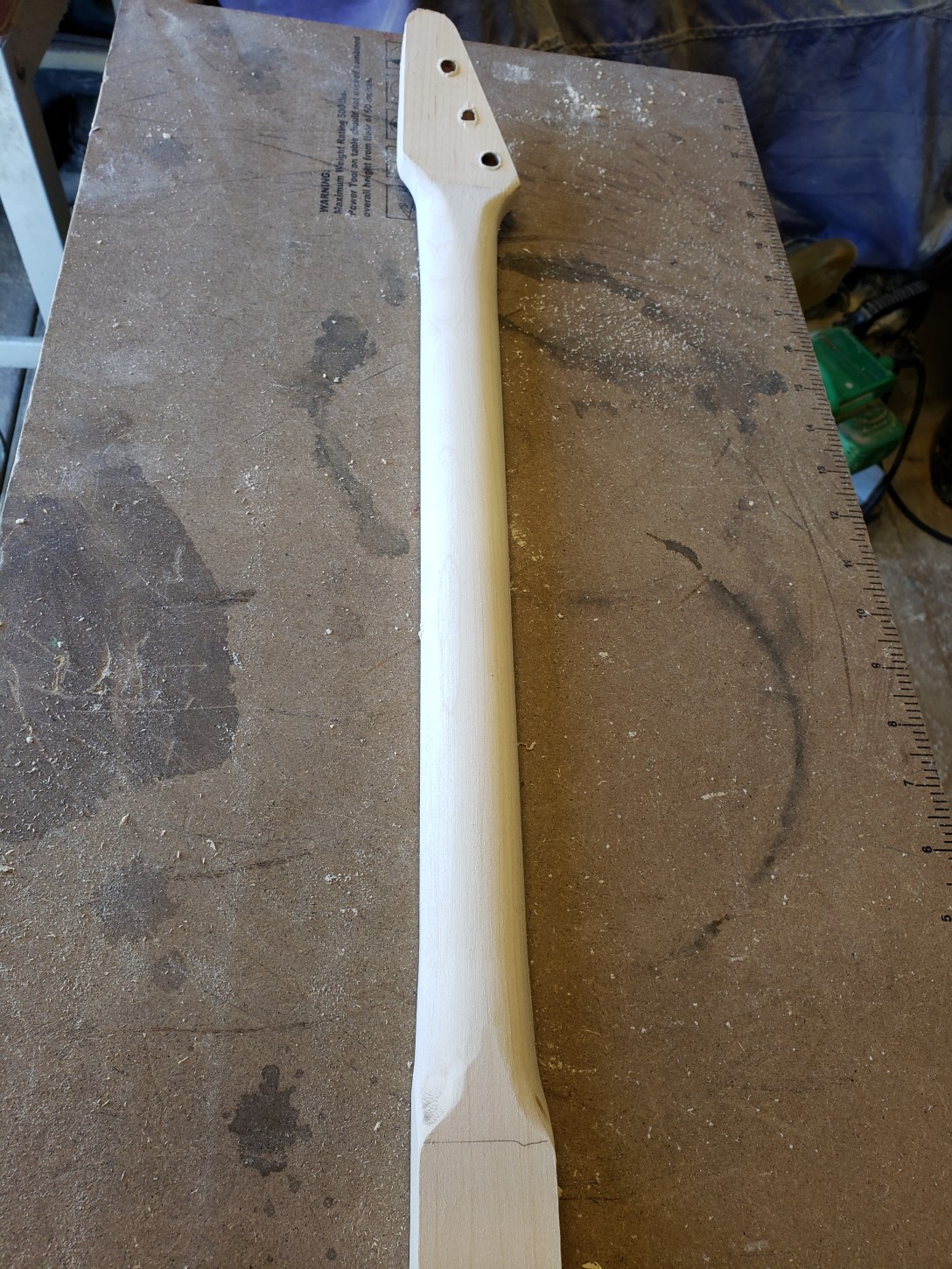
This is the basic neck I use for both the RG9 and RG10 guitars. From here the processes take drastically different paths.